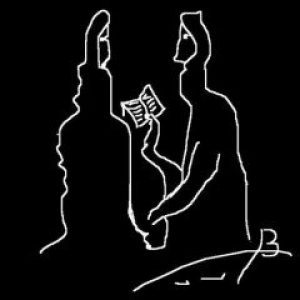

The story Ramayana* is his entire life journey starting from his innocent youth, his mastery over skills in winning Sita, his role as dutiful and obedient son to adhere to his father’s words while aware of the flagitious intensions of his step mother. He gives up all the worldly richness and sets away to spend 14 years in jungle. Sita being his wife accompanies him followed by Laxman, Ram’s younger brother.
They spend quite an adventurous and romantic** life in the forest. Sita finds her world in her husband Ram and experiences an unspelled love for him. Everything works fine when one day, Sita gets abducted by Ravana while Ram is away to fulfill one of her impossible wishes. Ram does everything possible to get back his love. He gathers a huge army, builds a bridge across an ocean, does all that he could. Finally, he succeeds to kill Ravana and gets her back. With this they complete 14 years of stay in jungle and they return to their kingdom after which they should have lived happily ever after.
But the story takes turmoil instead, Ram’s story ends here and Sita’s story begins. This happens when a subject of Ram’s kingdom whispers “how could Ram trust Sita, who been with Ravana for so long”. Ram wants a test now, Agni-Pareeksha – A test to check purity of a woman, by entering into fire. Exactly this part of the story becomes hard to digest. This is where so many questions arise and is left unanswered.
- Did it serve right for a person like Ram ‘the so called God’ to come down to such a cruel act?
- Is he setting example for all men or rather his followers to commit such an act?
- Or is he doing right by following well set example from his predecessors?
- Ram must have done justice to his kingdom? But why not to his wife? Had he really loved her he wouldn’t have banished her at such a crucial moment.
Did it serve her right to undergo another painful punishment after she had been a victim and had already suffered years of pain in the evil’s custody?
Why anywhere in the whole epic Sita does not have any views? Why didn’t she refuse when they were to leave for jungle (her sister Urmila does that)? Why didn’t she not ask back “why should I jump into fire?” “Don’t you trust me?”
We often come across people stating ‘Ram jaisa pati mila hai’. Can we really consider Ram as an ‘example for perfection’?
If these questions are answered they can be called as Sitayana. It should contain the entire possible thing Sita would have had in mind, but not presented in Ramayana. Nina Paley an Indian born professional animation moviemaker is releasing Santayana. She says:
“We never really know why Rama banishes Sita. Common interpretations resemble rationalizations and apologies: Rama “had to” abuse Sita to maintain the traditional order of his kingdom, in which the opinion of the lowliest man ranked higher than the life of any woman. As literature, Rama’s behavior towards Sita makes no sense…except it’s so realistic. It is the Ramayana’s ambiguities that make it so compelling.”
I strongly feel, movie is going to make some level of controversy and protest. If you are planning to participate, please make sure you have answers to all the questions Ms. Paley is asking.
Some clips of the movie have already reached youTube reservoir. I have posted two of them.
Sita in Love
Ram in Doubt
* Ramayana – the most popular mythological epic dwells around Ram –ninth incarnation of Lord Vishnu as believed by most of the Hindus. Ram is another name for a ‘perfect man’ and is symbolized for loyalty, respect, courage, justice and unbound love.
** Their romantic story in forest is only next best to Kalidasa’s Shakuntala. They sit watching “Kaumauda” near lake cheek to cheek whole night long with “rAtrirEva vyamsIt” (a great literary work in Sanskrit).
 The Bach
Hi,
Thanks for posting about ‘Sitayana’. Ancient epics and wisdom traditions continue to be sources of inspiration in our times. Sita’s been a cultural icon in India, and its great to know that there are ongoing attempts to figure out her perspective — something many scholars have also attempted in the recent past.
LikeLike
Well, the part where Rama rejects Sita, was included in Uttara Ramayana. It is disputed whether it was a part of Ramayana originally or not. Initially, Rama was shown as a great warrior king only, but later the portion of Vakti added in it. The Ramayana in Indonesia, that reached the place before 9th Century, does not have Uttara Ramayana at all. It ends with Rama’s return to the Ayodhya Kingdom.
LikeLike
@bachodi:
good find. you find some parts of epics, legends or holy books to be controversial. that is true with all such books. the reason i think behind this is we are at different times. that book was written in that time, not now. it was pretty ok then for a husband to ask his wife to go through any test. according to valmiki ramayana there were whispers concerning Sita’s long stay in Lanka spread through the city, and Rama came to hear the whisperings that a famine in the country was due to the guilt of Sita, who had suffered the caresses of Ravana while in captivity. Under the pressure from the citizens of Ayodhya, Rama banished her to the forest in which they had spent together the happy years of their exile. Reasons apart, the truth is due to this decision of Rama tore apart their happy life. Later in the epic we all know that she went back to Bhoodevi leaving Rama alone for rest of his life.
@Horizonspeaks:
Occurance of Ramayana and Valmiki’s life are contemporary. Valimiki got to knew about Rama only after Yudhakanda and had just arived Ayodhya after vanavaasa. So, the Uttarakanda which was something like live commentory given by Valmiki. It is not that Uttarakanda didnot exist. Uttarakanda is generally omitted from recitation or reading because it is full of tragedy.
LikeLike
@kaushik
You are assuming that Valmiki and Rama were true characters which has not much of scientific or historic basis.
LikeLike
@horizonspeaks:
Exactly. But there need not be any scientific basis. The historic evidences are just showing up. I’m not a historian or archaeologist who can prove it, but strongly believe that these epics occurred some time. And so did Mahabharatha. I dont understand what do you mean by ‘historic basis’? do you mean to say that some Greek hasnt written anything about it? Are you talking about some Palace not existing till now? Think how could one sitting in North India know the existence of ‘Adam’s Bridge’ all the way in South which is not visible unless a satellite takes its picture? How could one describe the city of Dwaraka which is submerged in the sea?
For instance, We dont have any significance evidence of Chandraguptamaurya’s existence other than our Indian tales and one book by Maghatanese. so what if Magathanese was wrong or what if he hadnt written a book, do you conclude that Chandragupta Maurya didnt exist?
History(ancient) is all about what people wrote in books. Did any one prove that Ramayana didnt occur? Please provide me with details.
LikeLike
Bachodi,
Guess you can ignore this story – whats an atheist worried about a storyline 😉
LikeLike
@spiritwoman
My pleasure Madame. And thanks for the comment.
@horizonspeaks
I have idea about them. I have read them long back. I still feel it is rama’s story not seeta’s.
@kaushik
Lot of new information (as always) thanks.
@gmohanprakash
Thanks for the comment. In fact I was waiting for your comment. I thought you’ll have lot to say. Alas… You dint feel like.
Come to your question. What an atheist has to do with Ramayana storyline. ? Nothing. Infact I wouldn’t have bothered if it were “not to be taken seriously “kind of book. But its not.
Lot of political, social, and racial events (real events) occurred based on this story line and still happening. I am brought this post because I felt there is one view, which is going to be untold in India because some people feel it is offensive.
LikeLike
Nice post.
As somebody has suggested, the part where Rama banishes Sita was later inserted into the epic.
But indeed ,many times epics do not seem to be fair to women. In Mahabharata, just because Kunti said something, Draupadi had to marry five guys.
K
LikeLike
@Kaushik
Did any one prove that Ramayana didnt occur? – No, it’s otherwise. Nobody proved that it did occur. The remnants of Troy was found in Turkey, we should also be able to find out the remnants of Ravana’s Lanka to accept Ramayana historically.
LikeLike
@Diganta
True. Ramayana occured many milleniums before Troy event occured(atleast going with what Max Muller told). India is a country which has been invaded every now and then, went thru many wars, people have been living here for long time with one civilizatin overlaping the other without any break. people building new houses, palaces, buildings.Area is a majr factor in India because of smaller country. what i mean to say is there is every chance that you may not find any evidence. so can we conclude that it didnt occur? Yes, finding out remnants of Ranvana’s Lanka would definetly bolster the faith. The Ramayana describes the construction of a bridge from India to Sri Lanka. While the Mahabharata describes the construction of an entire island city in record time and also described it sinking into the ocean after the death of Krishna. Both can be verified by modern archeology. The fabled bridge that was constructed by an ape race on the orders of Lord Rama, in the Treta yuga, which according to Indian time or yuga cycles, happened 1.2 million years ago, was recently discovered by a NASA space satellite. It has been dated 1.2 million years, thus putting it in the time-frame of it’s so-called construction. The island city of Dwarika’s construction is recorded in the Mahabharata – as is it’s sinking into the sea. It was found only recently by pioneering team led by India’s most reveered and respected archeologist Dr S.R. Rao and is heralded as the biggest archeological find after the discovery of Troy. It was a submerged and lost city on the west coast of India. Pottery found there has been carbon dated to more than 7000 years old. This proves the historicity of the Mahabharata.
LikeLike