
I recently came across another chain mail, about the numbers below plastic bottles we use. According to this mail, the number (generally within a triangle) written at the bottom, which ranges from one to seven, indicates how many times that particular plastic is recycled in reverse order. I dug a little deeper. Apparently, the number printed has nothing to do with the number of times plastic has been recycled. It’s just the type of plastic which is used for that particular bottle. 5 is polypropylene and 1 is polyethlyene terephthalate etc etc.
One primary use of having the numbers if to help recyclers to sort into appropriate groups. In other words, identification number.
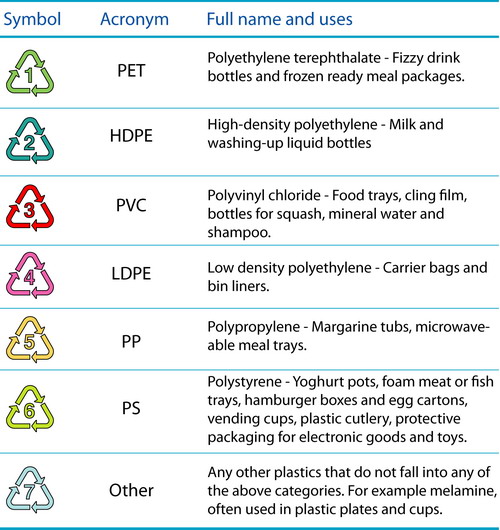
1 – PET, polyethlyene terephthalate
2 – HDPE, high-density polyethylene
3 – PVC, polyvinyl chloride
4 – LDPE, low-density polyethylene
5 – PP, polypropylene
6 – PS/PS-E, polystyrene / expanded polystyrene
7 – OTHER, resins or multi-materials
Here is copy paste of that mail

How to avoid:Check on the bottom of the bottle there is a triangle sign and there will be a number on it. If the number is higher than or equal to 5 –> then this bottle is safe to use.Whatever number under 5, will release the chemical. For most bottle water, the number is 1.Did you know chemical released by plastic water bottles can cause cancer(It is not the water that affecting you but the chemical releasing from the bottle)Pass this to all your friends and also make them aware of it…How to avoid:Check on the bottom of the bottle there is a triangle sign and there will be a number on it. If the number is higher than or equal to 5 –> then this bottle is safe to use.
Whatever number under 5, will release the chemical. For most bottle water, the number is 1.
Did you know chemical released by plastic water bottles can cause cancer(It is not the water that affecting you but the chemical releasing from the bottle)
Pass this to all your friends and also make them aware of it…
 The Bach
Please confirm which number is safe to reuse as bottle water: 2, 4 and 5 or 5, 6 and 7?
LikeLike
The author of this had given incorrect information.
No.1 made from polyethylene terephthalate – do not to reuse.
No.2 made from polyethylene or HDPE – safe (low risk of leaching).
No.3 made from polyvinyl chloride or PVC – avoid using.
No.4 made from low density polyethylene (LDPE) considered safe.
No.5 made from polypropylene – considered safe.
No.6 made from polystyrene or styrofoam – very toxic – avoid using.
No.7 is a mixture of all the other numbers & should also be avoided.
LikeLike
Traingle containing number 2, 4, & 5 are safe for use
LikeLike
Thanks !
LikeLike
Thanks for imformation Bach. 🙂
LikeLike
is there have any specific reason for make pet as recycling no.1 HDPE no.2 ??
i mean why not LDPE for no. 1 ??
LikeLike
always thinking that is the pomade number for every complexion.
LikeLike
Thank for information
LikeLike
The author has posted wrong and incomplete information.
LikeLike
I’m impressed, I must say. Truly rarely do I encounter a weblog that’s both educative and entertaining, and let me tell you, you have hit the nail around the head. Your concept is outstanding; the problem is an element that insufficient persons are speaking intelligently about. We are delighted we stumbled across this around my look for something concerning this.
LikeLiked by 1 person
thanks very much about these education. I will like to know, there are also some numbers which are not written in the arrowed triangle but rather beside or outside the triangle under cosmetic products, please what is the meaning of those numbers because they were not included in the list. thank you
LikeLiked by 1 person