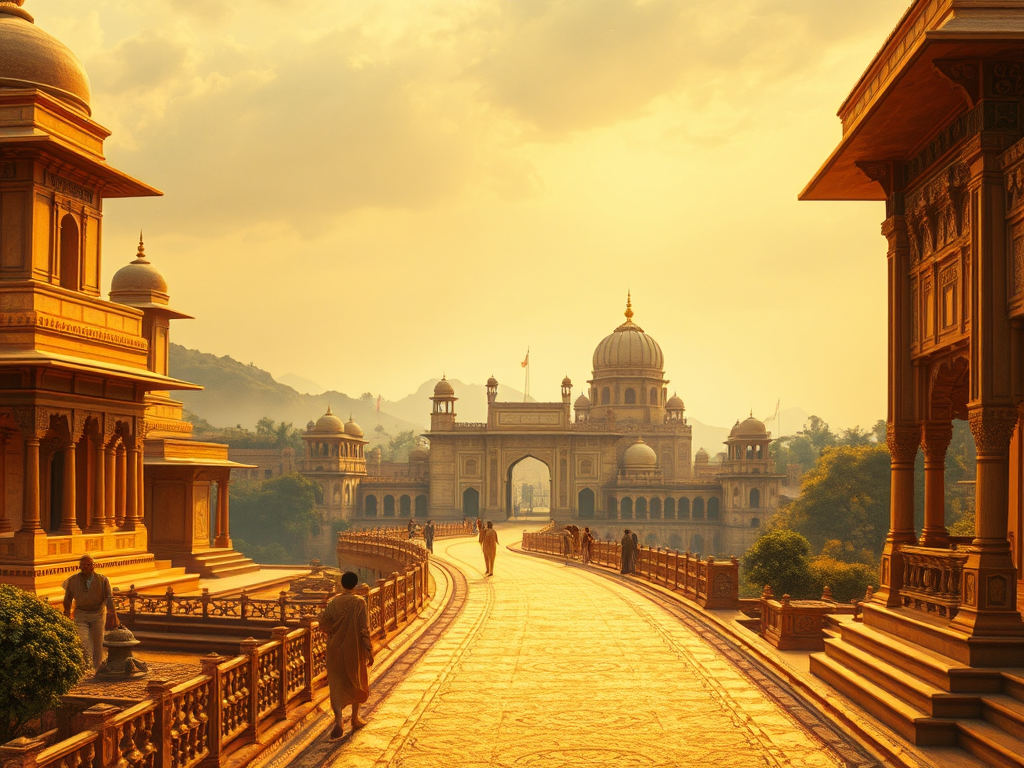

India had invited the Indonesian head of state, Honorable Prabowo Subianto, as chief guest of her 76th Republic Day celebrations. During the state-hosted dinner, the honourable president said: “A few weeks ago, I had my genetic sequencing test and my DNA test, which determined I have Indian DNA. Everybody knows that when I hear Indian music, I start dancing. It must be a part of my Indian genes.”
One more reference, although I am unsure of the dates. Hu Shih (aka Hu Suh), a Chinese diplomat, writer, literary scholar, philosopher, and politician, once said, “India conquered and dominated China culturally for 20 centuries without ever having to send a single soldier across her border.”
These two statements are testimonials of the millennia of imperial cultural domination of the Indospehere on the East and Southeast Asian countries. Towards the West and Middle East, it was mercantile and the domination of ideas, including Science, Mathematics, Astrology (and astronomy), and medicine.
However, unfortunately, For too long, the history of India was consumed through the lens of leftist historians and their narratives. Our history books drove the truth by narratives and kept a few generations in the dark. One of the key themes of our history was to glorify the invading dynasties, no matter how little they tried to assimilate with Indian culture. On the contrary, despite many of the most significant contributions towards mathematics, physics, medical science, astronomy, language and literature, the golden age of India was an era of a dark century. The academia and historians went overboard, assigning credit to traders and invaders even though the confessed translators of these works credited them to the original Sanskrit scriptures.
For a long time, truth remained outside the scope of mainstream literature and was largely dismissed as conspiracy theories. Many such hypotheses immediately attracted ridicule and were tagged as extreme right. In my previous posts, I have written about one of my first-hand experiences: Don’t let a school stand in your way of education. Our textbooks chose to ignore truckloads of evidence on the influence of the Infosphere and got busy glorifying the benefits of their ex-colonial masters. The exceptions were given as passing references only when travelers from China, Italy, or Rome explicitly mentioned undeniable facts.
With this context, let me recommend a book to help you make sense of the claims I made above. It is a must-read: The Golden Road by William Dalrymple. Please add it to the must-read category.
I had goosebumps while reading some of the chapters. I will not get into too many details; let William read them to you. However, a small list goes as follows:
- Unless otherwise popularized, the Silk Road is a relatively new concept and hardly a few centuries old. The name did not exist until the 1930s; all kudos to the Chinese who created a soft power around it. Forget having a direct road; there weren’t even direct trade relations between the two ends until the Mongols came along. For instance, The magnitude of Roman-era coins discovered should’ve been a good indicator of a mercantile relationship. What was found so far in China can be counted on a hand. On the contrary, India holds the lion’s share of discovered gold coins unearthed collectively across the world, of course, except for Roman and Byzantine territories. That indicates how insignificant the Silk Road has been to medieval history. Romans held their lion’s share of European trading with India. The trade balance with India was so vast that India single-handedly emptied the gold reserves through trade.
- For thousands of years, Indic cultures, languages, philosophies, scriptures, religions, and science have dominated the entire region of Asia (except a few pockets) without raising a sword (except for 11th-century Chola). Only the transmission of ideas achieved them, not fanaticism.
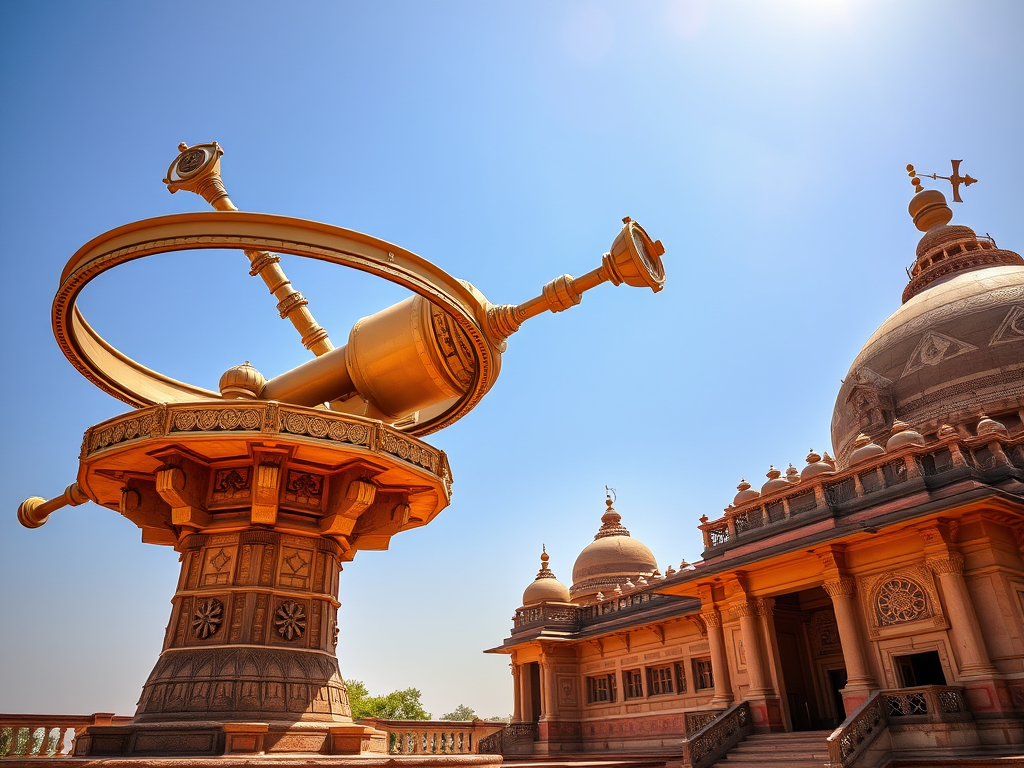
- Did you know the spherical earth theory, the solar cycles, and their computations accurate up to the 7th decimal, decimal number systems and symbols, trigonometry, algebra, Yoga, Medicine, and astronomy predate their Arabic translation by at least four centuries? Were the scholars who translated them in Abbasid Baghdad from Sanskrit to Arabic ancestral Buddhist monks from Persian land? None forgot to credit the right people for the discoveries and inventions. But somehow, this is not widespread knowledge.
- The Fibonacci of Pisa, who picked the mathematics concepts from the Arabic translations, was well aware of who he was to credit. In his work, Liber Abaci is correctly credited and describes it as Modus Indorum, i.e., how Indians would compute it.
Please read through the book and thank me later.
P.s. I did write about this topic before in India’s Cultural Invasions. After reading this book, I am compelled to add more P.S 2 I covered the topic of Indian Maritime domination in this post, coincidentally, after reading a couple of books by Sanjiv Sanyal.


https://blog.greaterlondonvolunteering.org.uk/2025/04/04/glory-casino-mobile-app/
LikeLike
https://bbpmag.com/2025/07/13/glory-casino-a-premier-destination-for-live-gaming-thrills/
LikeLike